
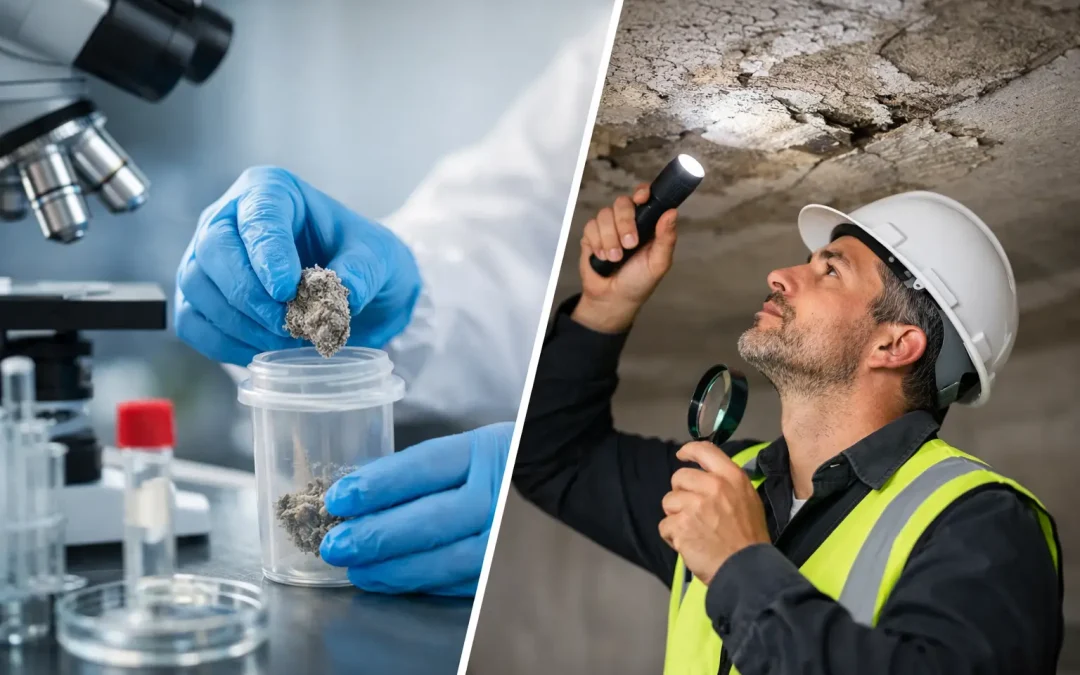
A fibrous cement sheet behind a bathroom wall, old vinyl flooring under carpet or insulation around ageing pipework can all look harmless. That is the problem with asbestos testing vs visual inspection: one can identify likely risks, while the other can provide evidence of what the material actually contains. If your Sydney or NSW property was built or renovated before 2004, guessing is not a safe project plan.
A visual inspection has a valuable place. It helps assess condition, location and the likelihood that asbestos-containing material is present. But asbestos fibres are microscopic, and many products look identical to non-asbestos alternatives. Only appropriately collected samples analysed by a NATA-accredited laboratory can confirm whether a material contains asbestos.
What a visual asbestos inspection can tell you
A visual inspection is the starting point for many property decisions. An experienced asbestos professional reviews accessible areas of a home, workplace or site to identify materials that are commonly associated with asbestos. This may include corrugated cement sheeting, eaves, wall cladding, old electrical switchboard backing, vinyl tiles, adhesives, roofing products, pipe lagging, fire doors and insulation.
The inspection also considers the material’s condition. Is it sealed and intact? Is it cracked, weathered, drilled, sanded or disturbed by planned work? Is it bonded material, where fibres are held in a cement or resin matrix, or friable material that can be crumbled by hand pressure when dry? These details affect the immediate risk and the controls required.
For a facilities manager, visual findings can help prioritise areas for a register or management plan. For a homeowner, they can prevent a renovator from cutting into a suspect wall or lifting old flooring without controls. For a builder, they can flag the areas that need testing before demolition, services work or site mobilisation.
What a visual inspection cannot do is confirm asbestos by appearance alone. Fibre cement products, textured coatings, insulation and vinyl materials have changed over decades, and visual similarities are common. A material that appears safe may contain asbestos. A material that looks like asbestos may not. Treating either judgement as certain can create unnecessary costs or, worse, an exposure risk.
Asbestos testing vs visual inspection: the key difference
The difference is simple. A visual inspection provides a professional risk assessment based on location, age, product type and condition. Asbestos testing provides a laboratory result from a sample.
During material testing, a competent professional takes a small sample using controlled methods designed to avoid spreading dust. The sample is labelled, documented and sent to a NATA-accredited laboratory for analysis. The laboratory report identifies whether asbestos is present and, where relevant, the asbestos type. That result gives owners, duty holders and contractors a sound basis for deciding whether to leave material managed in place, repair it, encapsulate it or arrange licensed removal.
Air monitoring answers a different question. It does not usually identify what a wall, ceiling or floor contains. Instead, air sampling assesses airborne fibre levels in a defined area, often during or following asbestos removal work. It may be used to support clearance processes and provide documented reassurance that a controlled work area has been properly dealt with.
Testing is therefore not automatically necessary for every intact suspect material in a low-disturbance location. If the material will remain undisturbed, a professional may advise managing it as presumed asbestos until a future decision requires certainty. However, before renovation, demolition, drilling, cutting, removal or repairs, testing is often the clearest and most cost-effective way to know what you are dealing with.
When visual inspection is enough, and when it is not
A visual inspection may be enough to make an immediate safety decision. If insulation is loose, damaged or visibly contaminating an area, the right response is to stop access, isolate the area and arrange professional advice. Waiting for a result before preventing further disturbance is not sensible.
It can also be enough when an asbestos professional identifies a clearly suspect material that will not be touched. The material can be recorded, labelled where appropriate and managed under an asbestos management plan. The decision should be documented, particularly in commercial, industrial and multi-tenancy settings where contractors may later enter the area.
Laboratory testing becomes much more important when work will disturb the material or when the result changes the scope, price or method of the job. Common examples include a kitchen renovation involving old wall linings, a bathroom strip-out, removal of vinyl flooring, roof replacement, demolition, excavation around old services, or maintenance work above ceilings.
Testing is also useful where multiple materials are present. A single building may contain a mix of asbestos and non-asbestos products. Assuming every item is asbestos can increase the removal scope and project cost. Assuming none of it is asbestos can expose workers and occupants to avoidable risk. Proper sampling separates fact from assumption.
Why DIY sampling is a poor trade-off
Online advice can make sample collection sound straightforward. In practice, breaking, cutting or scraping suspect material can release fibres, particularly if the material is friable, aged or already damaged. A poor sample may also be unrepresentative, improperly packaged or contaminated, leaving you with an unreliable result and a mess to manage.
The risk is not limited to the person holding the tool. Dust can settle on nearby surfaces, travel through an occupied room or be carried into vehicles and other parts of the property. For workplaces, unplanned disturbance may also affect worker safety obligations, programme dates and contractor access.
A controlled assessment keeps the job proportionate. A qualified operator can identify the right sample locations, use appropriate controls, arrange laboratory analysis and explain the result in plain English. If removal is needed, the same assessment information helps plan containment, safe work methods, disposal and clearance documentation without avoidable delays.
What to do if you find suspect material
First, stop work. Do not drill, sand, sweep, pressure-clean, break or remove the material. Keep people away from the area, especially children, tenants, workers and pets. If dust has been created, avoid using a household vacuum or dry sweeping, as these actions can spread contamination further.
Next, arrange a professional visual assessment and discuss whether material sampling or air monitoring is required. Be clear about what work is planned, what has already been disturbed and whether the area is occupied. Good advice depends on the actual site conditions, not a generic answer over the phone.
For commercial and industrial sites, gather any existing asbestos register, management plan, previous survey reports and renovation records before the inspection. These documents can help, but they should not be treated as proof that every area has been assessed, particularly after alterations or damage.
If there is an urgent incident involving damaged friable material, visible dust or uncontrolled disturbance, restrict access immediately and seek specialist make-safe support. The priority is containment and exposure control, followed by a documented plan for assessment, remediation and clearance.
Testing supports better removal decisions
A positive test result does not always mean immediate removal is the only option. Intact bonded asbestos in a stable, inaccessible location may sometimes be safely managed until planned works make removal practical. The right choice depends on condition, accessibility, future disturbance, occupancy and the ability to maintain controls over time.
Removal is often the better option where material is damaged, friable, in a high-traffic area or directly affected by building works. It can also reduce ongoing management obligations for landlords, facility managers and owners planning to sell, redevelop or refurbish. The removal method must match the material and site risk, with appropriate containment, licensed handling, compliant transport and disposal, and complete records.
J Group Industries provides the full chain of support: inspection, controlled sampling, NATA-accredited laboratory analysis, management advice, licensed removal and site documentation. With NSW licences AD214709 and LAA002123 and full insurance coverage, the focus is on making the next step clear and fully compliant.
The useful question is not whether a material merely looks like asbestos. Ask whether anyone could disturb it, what evidence is needed before work begins and who is accountable for controlling the risk. Get that answered before the first tool comes out, and the job stays safer, clearer and far easier to manage.